
The following content is translated from Chinese source by machine translation without post-editing.
On March 21st, colleagues from TalkingChina arrived in Shantou amid the early spring sunshine following the Spring Equinox, kicking off a four-day culinary journey exploring the flavors of Chaoshan. It was a feast for the taste buds, and even more so a journey through time to trace the origins of overseas expansion.
On the first day, the group ascended Piaoran Pavilion in the Queshi Scenic Area. Perched atop Jiguan Peak, this two-story, six-pillar pavilion is roofed with golden glazed tiles, serving as the iconic spot for “Gazing Afar from the Floating Pavilion”—one of the Eight Scenic Views of Shantou. Leaning against the railings, they overlooked the bustling inner bay with ships sailing freely and the convergence of three rivers flowing into the sea, feeling utterly ethereal and carefree.
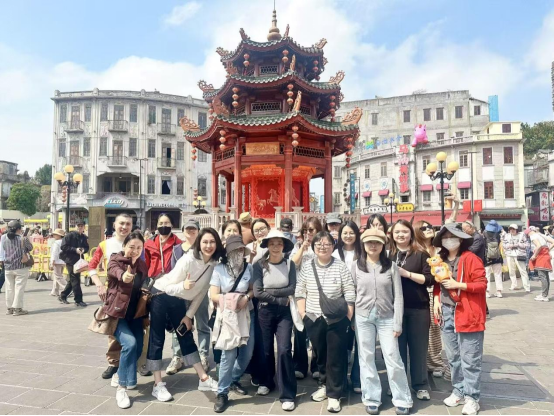
Later, they wandered through the arcade buildings of Xiaogongyuan. Over two thousand arcades radiate outwards in a fan shape, with the seven-story Nansheng Department Store standing towering and grand. Traces of the prosperity once enjoyed by this century-old commercial port linger vividly in sight.
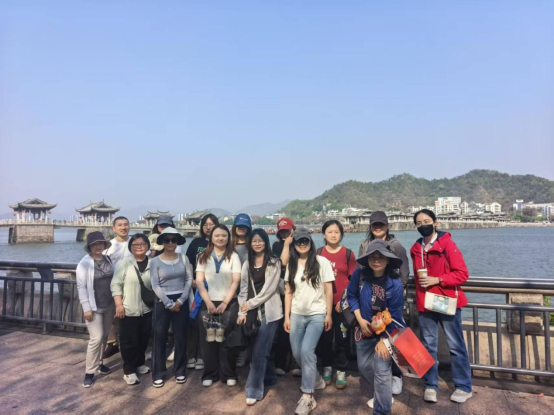
On the second day, the team headed for Nan’ao Island, hailed as Guangdong’s most beautiful island. They crossed the 11-kilometer Nan’ao Bridge, a giant sea dragon reclining gracefully upon the blue waves.
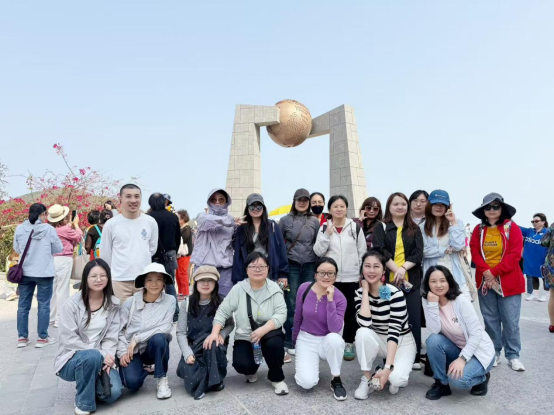
After landing on the island, they paused at the Gate of Nature — a Tropic of Cancer landmark shaped like the Chinese character Men (Gate). Its spherical radius of 3.21 meters echoes March 21st, the Spring Equinox, with every dimension subtly aligned to astronomical solar terms.
The colleagues walked barefoot along the waves at Qing’ao Bay, known as the Oriental Hawaii. Stretching over 2,000 meters, its golden sandy beach remains crystal clear amid the ebb and flow of the tides.
In the afternoon, they visited the General’s Mansion. There stands a 400-year-old ancient banyan tree, strong and towering — the very site where Zheng Chenggong once posted recruitment notices for his army. Four hundred years of ups and downs feel but a fleeting moment before their eyes.
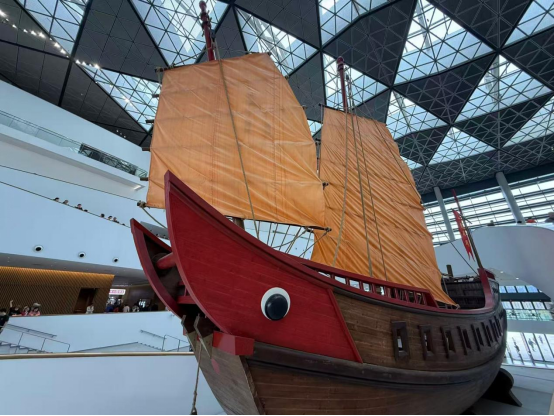
Inside the Chaoshan Culture Exhibition Hall, the group finally came face to face with the core symbol of that magnificent era—the Red Head Ships.
In the first year of the Yongzheng reign in the Qing Dynasty, the imperial court decreed that merchant ships from Guangdong be painted red at the bow. This symbolized that “the south belongs to fire, bringing great fortune and prosperity.”
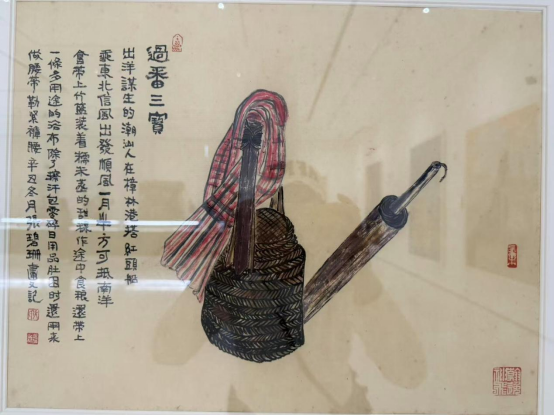
It was these wooden sailing vessels, with their crimson prows and striking large black-painted eyes, that set sail from Zhanglin Ancient Port in Chenghai. Carrying countless Chaoshan people, they braved wind and waves to journey south to Southeast Asia, known locally as guofan—venturing overseas.
One Red Head Ship tells half the history of Chaoshan overseas migration. It carried not just cargo, but also the fearless, enterprising maritime spirit of daring to strive and striving to win.
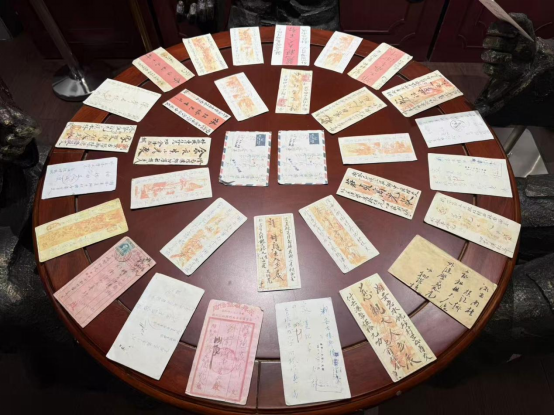
At the Shantou Qiaopi Museum, everyone was deeply moved standing before its collection of 120,000 overseas remittance letters.
Qiaopi, commonly known as fanpi, were remittance receipts sent back home by overseas Chaoshan migrants through private channels, always accompanied by personal family letters. In an era of slow travel and perilous seas, they embodied this poignant truth: one letter home, a little money sent, a homesickness stretching ten thousand miles.
The brief note “I’m alive, money enclosed” encapsulated the heaviest reassurance a wanderer could send to their family after surviving raging storms. These yellowed, fragile slips of paper built modern history’s largest private cross-border financial network, sustaining the livelihoods and fortunes of countless Chaoshan families back home.
On the third day, the group traveled to the ancient city of Chaozhou.Kaiyuan Temple, a time honored Buddhist shrine with a history of over a thousand years, still retains the grace of the Tang Dynasty. Embodied with architectural craftsmanship from the Song, Yuan, Ming and Qing dynasties, it is hailed as “the foremost ancient temple in eastern Guangdong.”
They then crossed Xiangzi Bridge, known as the world’s earliest movable opening bridge. With eighteen linked boats connecting twenty four stone piers, the team admired the spring tides of the Han River while listening to legends of immortals and immortals contending in wisdom. Wandering along Paifang Street, they saw twenty two stone memorial archways from the Ming and Qing dynasties standing side by side with Nanyang style arcades, blending Chinese and Western aesthetics. Beneath the archways, the elegance of Chao embroidery, handcrafted clay teapots and the fragrance of Kung Fu tea intertwined gently in the air.
Looking back into history, the ancient shuike (oversea messengers) and qiaopi agencies were in fact early cross border service providers.Today, the team at TalkingChina carries on this legacy as the modern day “ferrymen” of global connection.
Just as the Red Head Ships once overcame physical distances across oceans, TalkingChina breaks down the language barriers — the modern Tower of Babel — for enterprises going global.rom the earliest days of messengers personally carrying letters across seas, to day’s sophisticated multilingual localization services, TalkingChina covers more than 80 languages worldwide. We empower Chinese enterprises to bridge linguistic divides and build global brands acrossainstream European and American markets, as well as countries along the Belt and Road Initia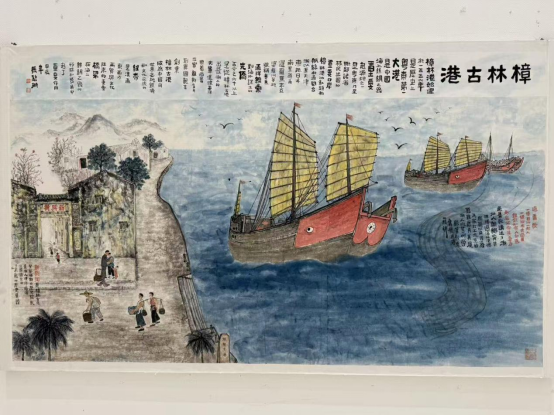
On the final day of the trip, we visited Jieyang City God Temple. Amid the century-old arcaded buildings along Zhongshan Road, crowds followed the enticing aromas to seek local delicacies. There was the chewy texture of Grandpa’s Dry Noodles, the fresh sweetness of oyster omelets, and the silky smoothness of rice noodle rolls, with laughter and cheerful chatter filling the air all the way.
This four-day journey across Chaoshan unfolded from the dawn glow over coastal islands to the neon lights of the ancient city at night. Setting off from the hometown of the red-headed ships, we felt the hardships and homesickness of our ancestors who ventured overseas to seek a living. Looking to the present, TalkingChina upholds the mission of “Empowering Globalization”, supporting Chinese enterprises as they sail forth to embrace the world. We savored flavors on our tongues, wandered through scenic lands beneath our feet, and above all, at the intersection of history and the future, we came to understand the deep affection and grand ambition held by this city.
Post time: Apr-01-2026